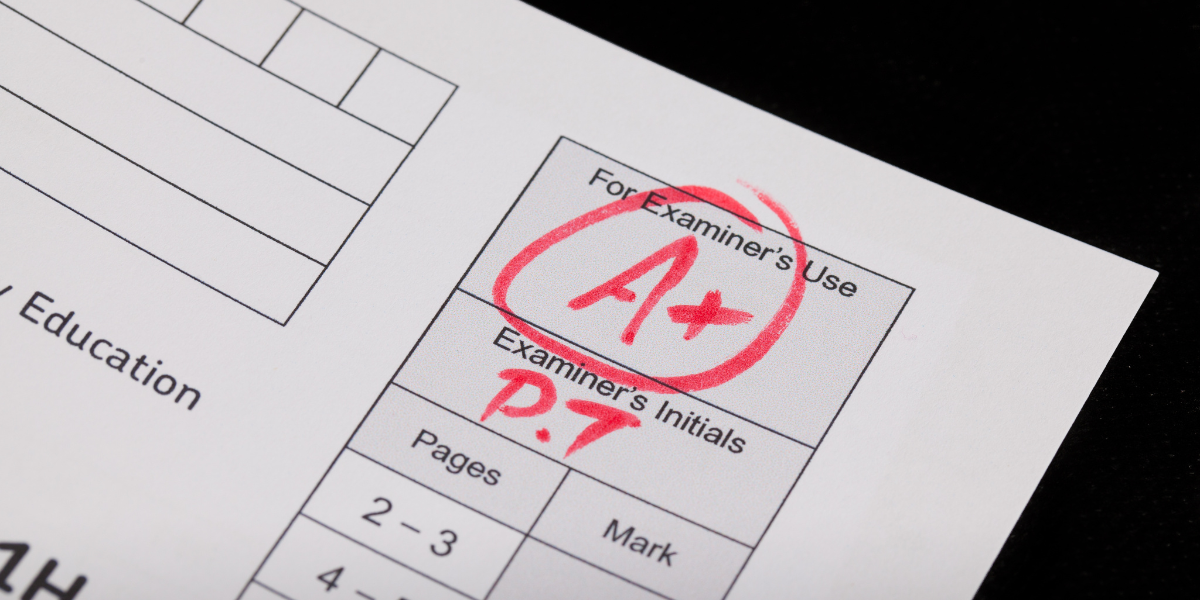
Mock results have a short window of usefulness. In the first few days after getting them back, the information they contain is fresh, the papers are in your hands and the specific questions you lost marks on are still within reach. Most students look at the grade, feel good or bad about it and move on. By the time spring term begins, the papers have been put away and the information in them has been largely ignored.
That is a significant waste of the most detailed diagnostic information available before the real exams. This guide is about using mock results properly while you still have them, and turning what they show into a specific plan for the months between now and May.
The first thing to do: read the paper, not just the grade
The grade on a returned mock paper is a summary. It tells you approximately where you are but nothing about why you are there or what to do about it. The mark breakdown by question is where the useful information lives.
Go through every question on every returned paper and mark it into one of three categories. Questions where you scored full marks: these are your secure areas. Questions where you scored partial marks: these are your near-misses, where you had knowledge but lost marks on application, precision or technique. Questions where you scored zero: these are either knowledge gaps or complete application failures.
This categorisation by question, across all your returned papers, gives you a prioritised revision list for the months ahead. Near-misses are often the most productive targets because the knowledge is already there and the fix is frequently a small one: using more precise language in Science, showing working in Maths, reading the question more carefully. These can often recover one to two grade boundaries without any new content learning at all.
What different results mean and what to do about them
This is a positive result but not a signal to ease off. The real exams cover the full specification, and mocks typically cover only what has been taught so far. There is content still to come that needs the same level of preparation. The gap between a mock grade and a real exam grade also tends to be larger than students expect: mock conditions are slightly more familiar, some content is still fresh from recent lessons and the psychological pressure of the real exam is not fully replicated.
What to doReview the questions where you lost marks even in a strong paper. Every dropped mark in a mock is a dropped mark that can be recovered in the real exam. Use the Christmas period to stay on top of the subjects going well rather than focusing exclusively on the weaker ones. Arriving at summer exams with three strong subjects is better than arriving with one strong subject and two recovered ones.
One grade below target is a very common and entirely recoverable position. The gap between a grade 5 and a grade 6, or a grade 6 and a grade 7, in GCSE Maths and Science is typically a matter of closing a handful of specific gaps and improving exam technique in a few identifiable areas. Students who treat the one-grade gap as a concrete problem to solve rather than a vague shortfall to feel bad about usually close it by summer.
What to doIdentify the specific mark losses from the paper. In most cases, one grade boundary can be recovered by addressing two or three topic areas and tightening exam technique on the types of question you are consistently losing marks on. Build a specific list, prioritise by mark value and work through it systematically across the spring term. Do not try to fix everything at once.
A result that is two or more grades below target is a clear signal that something significant needs to change between now and summer, and that the current approach to revision or to the subject is not working well enough. This is not a comfortable position but it is one that five months of well-directed effort can genuinely address. Two grade boundaries in five months is achievable for most students in most subjects with the right preparation.
What to doStart with an honest assessment of what the gap is actually about. Is it primarily content knowledge: large areas of the specification that are not secure? Is it exam technique: knowing the content but not translating it into marks? Is it both? The answer determines the approach. A content gap needs systematic topic-by-topic revision. A technique gap needs past paper practice with careful mark scheme analysis. Most students with a large gap have both, and addressing them in parallel is the most efficient route forward. This is also the point at which targeted support, from a teacher or a tutor, is most valuable: the gap is large enough that working through it alone, without feedback, is significantly less efficient than having specific guidance on the highest-priority areas.
The process for each returned paper
Not just the big losses. One-mark losses across a paper add up quickly and are often easier to address than multi-mark topic gaps. Know exactly where every mark went.
A knowledge gap needs content revision. An application error needs more practice on the specific method. A technique error needs a conscious habit change. The fix is different for each. Applying the wrong fix wastes time.
Not "revise Biology" but a named list of topics and question types to address. This list is your revision priority for the spring term. Keep it somewhere visible and work through it systematically rather than revising broadly.
Address the topics and question types that carry the most marks first. In Maths, algebra and number questions appear across every paper and closing a gap there recovers marks in multiple places simultaneously. In Science, the topics with the highest question frequency deserve the most attention.
The action list only has value if it feeds into actual revision sessions. Allocate specific topics to specific evenings across the weeks before Christmas and the holiday itself. A plan that exists only as a list and never becomes scheduled time produces no improvement.
Your subject teachers can often tell you more specifically where the marks went than the mark scheme alone. They have marked your paper, they know the common errors in that topic and they can advise on whether the loss reflects a broader pattern they have seen in your work or a one-off issue in that sitting. A five-minute conversation with your Maths or Science teacher about your mock paper is one of the most useful things you can do in the week results come back. Most teachers are more helpful in this conversation than students expect.
What mock results cannot tell you
Mock results are a snapshot of where you are now, not a prediction of where you will be in summer. Students who perform below target in December mocks and respond with a specific, well-directed plan regularly exceed those mock grades in the real exams. Students who perform at or above target in mocks and coast through the spring term often find the real exams harder than expected.
The real exams are sat at the end of a longer preparation period, covering the full specification including content not yet taught at mock time, under conditions that carry more genuine pressure than mocks. A mock grade is the starting point for a conversation about what to do next. Treat it as information, not as a verdict.